








Nestle India Share Price: Impact of Q1 Results and Future Outlook
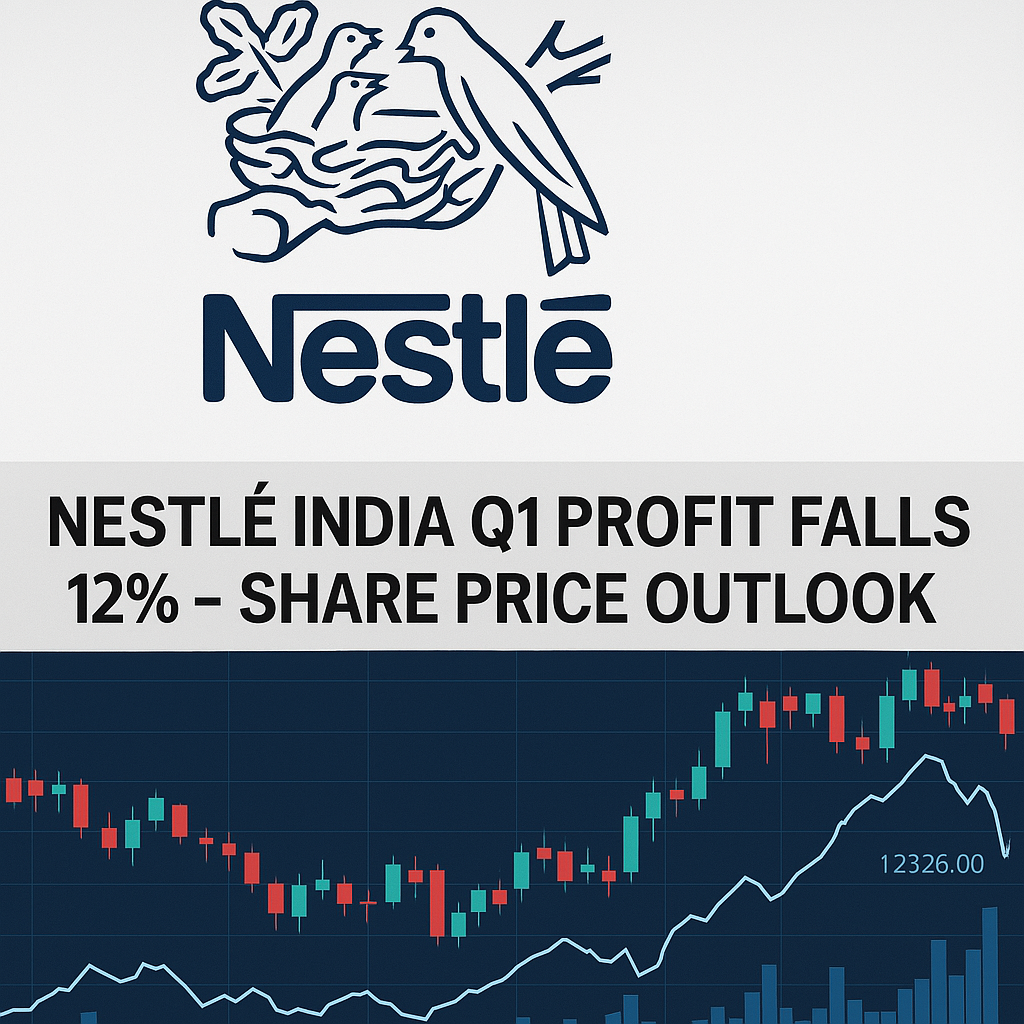
Nestle India reported a 12% dip in net profit for Q1 2025 due to higher raw material costs. This article analyses Nestle India’s share price movement, earnings details, and market expectations ahead.
Table of Contents
Introduction
Nestle India Limited released its financial results for the first quarter of fiscal year 2025 this week, presenting a mixed performance picture. The fast-moving consumer goods (FMCG) company reported revenue of ₹5,305 crore, representing year-over-year growth of 9.8%. However, net profit declined 12% to ₹698 crore compared to ₹795 crore in the corresponding quarter of the previous year.
The results reflect the challenging cost environment facing consumer goods manufacturers globally. Total expenses increased 14.5% year-over-year to ₹4,244 crore, outpacing revenue growth and compressing operating margins. Management attributed the margin pressure primarily to elevated raw material costs, particularly milk and cocoa prices.
Nestle India shares traded at approximately ₹2,367 on the NSE as of July 24, 2025, following a 1.2% intraday decline after the results announcement. The company did not announce an interim dividend with the quarterly results. Trading volumes increased approximately 15% above average, indicating active investor repositioning following the earnings release.
Q1 2025 Financial Performance Breakdown
Revenue Growth Analysis
Nestle India recorded total revenue of ₹5,305 crore during the first quarter of fiscal year 2025. This represented an increase from ₹4,830 crore in Q1 2024, translating to year-over-year growth of 9.8%. The revenue expansion occurred across multiple product categories within the company’s portfolio.
The dairy segment showed resilience during the quarter, with brands including Everyday milk powder and Milkmaid condensed milk contributing to growth. Consumers continued prioritizing established brands for essential nutrition products despite price increases implemented by the company. The segment benefited from both volume growth and price realization, though margins faced pressure from elevated input costs.
The nutrition category demonstrated robust performance, driven by products like Cerelac infant cereal and Lactogen infant formula. Growing awareness of infant and child nutrition among Indian consumers supported demand in this segment. The category maintained strong market positioning despite premium pricing relative to unbranded alternatives.
The confectionery business experienced varied performance across different price segments. Premium chocolate products maintained momentum, while price-sensitive segments faced some volume pressure as consumers became more selective about discretionary purchases. The company’s focus on premiumization within confectionery helped support overall value realization.
Profitability Metrics and Margin Compression
Net profit for Q1 2025 reached ₹698 crore, down from ₹795 crore in the year-ago quarter. This represented a decline of approximately 12% year-over-year. The profit decrease occurred despite strong revenue growth, highlighting the intensity of cost inflation affecting the business.
The mathematics of this performance reveal significant margin compression. With revenue growing approximately 10% while profits declined 12%, effective cost pressures substantially exceeded the benefits of operational leverage typically associated with revenue expansion. The margin compression affected all major cost categories.
Operating profit margins contracted as total expenses rose 14.5% year-over-year to ₹4,244 crore. The expense growth rate significantly exceeded revenue growth, creating the margin squeeze that impacted bottom-line profitability. Raw material costs constituted the largest component of the expense increase.
EBITDA margins declined on a year-over-year basis due to the combination of rising input costs and competitive pressures limiting aggressive price increases. The company’s historical margin profile showed more favorable trends in previous periods when commodity costs remained stable. Return on equity metrics also reflected the impact of reduced profitability.
Expense Structure Analysis
The 14.5% increase in total expenses to ₹4,244 crore provides insight into specific cost pressures. Raw material costs rose substantially due to milk price inflation of approximately 10% year-over-year and record global cocoa prices. These two commodities represent critical inputs across Nestle India’s product portfolio.
Packaging costs increased due to higher prices for plastics, paper, and metal components used in product packaging. Energy expenses rose in line with fuel price trends affecting manufacturing operations. Logistics and distribution costs increased due to transportation fuel inflation and capacity constraints in shipping networks.
Employee costs and administrative expenses also contributed to the overall expense increase, though at more moderate rates than raw material and logistics costs. Marketing and promotional spending remained elevated as the company invested in brand building and new product launches. Research and development expenditure continued supporting innovation initiatives.
The company indicated that cost optimization measures and operational efficiency improvements were implemented but proved insufficient to fully offset the magnitude of input cost inflation. Process improvements and supply chain optimization generated some savings but could not neutralize the impact of broad-based commodity price increases.
Dividend Policy Considerations
Nestle India did not announce an interim dividend with the Q1 2025 results. This decision reflected management’s focus on maintaining financial flexibility during a period of margin pressure and cost inflation. The absence of an interim dividend represents a departure from some previous quarters when interim distributions were declared.
The company has historically maintained a consistent approach to dividend distribution, with dividends typically declared on an annual basis following full-year results. Management commentary suggested that dividend decisions would continue to be made with a medium-term perspective considering overall business performance and cash flow generation.
Retained earnings provide financial resources for operational requirements, strategic investments, and potential acquisition opportunities. During periods of elevated input costs and margin pressure, maintaining adequate liquidity supports business stability and competitive positioning. Cash flow management becomes particularly important when facing uncertain commodity price environments.
Investors focused on dividend income may view the absence of an interim dividend with disappointment. However, the decision aligns with prudent capital allocation practices during challenging operating conditions. Historical dividend payment patterns suggest the company maintains commitment to shareholder returns over longer time horizons.
Raw Material Cost Pressures and Commodity Market Dynamics
Milk Price Inflation Impact
Milk prices increased approximately 10% year-over-year during Q1 2025, representing one of the most significant cost pressures affecting Nestle India’s profitability. Dairy products constitute a substantial portion of the company’s portfolio, making milk price movements particularly impactful on overall cost structure.
Several factors contributed to elevated milk prices in India during the quarter. Monsoon patterns affected fodder availability and quality, increasing feed costs for dairy farmers. Strong domestic demand for dairy products from both direct consumption and processing industries supported price levels. Supply chain inefficiencies in milk procurement and distribution systems added to cost pressures.
Nestle India sources milk through a network of procurement centers and supplier relationships built over decades. The company maintains long-term contracts with suppliers to provide some price stability and supply security. However, the magnitude of recent price increases challenged these risk management strategies.
The impact of milk price inflation extends across multiple product categories including Everyday milk powder, Milkmaid condensed milk, and various nutrition products containing dairy ingredients. Margin profiles in these categories faced particular pressure as milk represents a high percentage of input costs. Price increases to consumers helped offset some impact but could not fully neutralize the cost inflation.
Global Cocoa Price Dynamics
Cocoa prices reached record highs on global commodity markets during the quarter, creating significant challenges for Nestle India’s confectionery business. The chocolate category includes popular brands like KitKat and other cocoa-based products sensitive to these commodity price movements.
Several supply-side factors drove cocoa prices higher during recent months. Weather disruptions in major producing regions of West Africa affected crop yields and harvest quality. Plant diseases and pest pressures reduced output in some growing areas. Infrastructure limitations in producing countries constrained supply chain efficiency.
Demand-side dynamics also contributed to price pressures as global chocolate consumption continued growing, particularly in emerging markets. Industrial buyers competed for limited cocoa supplies, supporting elevated price levels. Inventory dynamics and speculative positioning in commodity markets added volatility to price movements.
Nestle India sources cocoa through global supply chains with purchasing relationships managed at both local and international levels. The company’s global parent organization provides some advantages in commodity procurement through scale and diversified sourcing. However, elevated global prices ultimately flow through to local operations regardless of purchasing arrangements.
Packaging and Logistics Cost Increases
Packaging costs rose substantially during Q1 2025 due to increases across multiple material categories. Plastic packaging costs increased in line with crude oil derivative prices. Paper and cardboard packaging costs rose due to pulp price inflation and increased demand. Metal packaging components became more expensive as commodity metal prices remained elevated.
These packaging cost increases affected virtually all product categories as most items require some form of retail packaging. The cumulative impact of packaging inflation added several percentage points to overall cost of goods sold. While individual packaging items may represent small costs per unit, the aggregate effect across millions of units becomes material.
Logistics and distribution expenses increased due to diesel fuel price movements and capacity constraints in transportation networks. The company operates extensive distribution systems reaching retail outlets across urban and rural India. Transportation costs for moving products from manufacturing facilities to distribution centers and ultimately to retail locations all faced upward pressure.
Port congestion and international shipping cost inflation affected imported raw materials and packaging components. Domestic transportation costs rose as trucking companies faced higher fuel expenses and driver wage pressures. Warehouse and storage costs also increased due to real estate inflation and elevated operating expenses.
Market Reaction and Share Price Analysis
Trading Activity Following Results Announcement
Nestle India shares experienced moderate selling pressure following the Q1 2025 results announcement, declining approximately 1.2% during intraday trading. The stock traded at ₹2,367 on the NSE as of July 24, 2025. This relatively modest decline despite the significant profit drop suggested investors had partially anticipated margin pressures.
Trading volumes increased approximately 15% above average daily levels, indicating heightened investor activity following the results release. The elevated volume reflected portfolio repositioning by both institutional and retail investors assessing the implications of margin compression. Order flow patterns showed initial selling pressure giving way to selective buying at lower price levels.
The stock recovered from intraday lows during the trading session, suggesting institutional investors viewed price weakness as a potential accumulation opportunity. Price action patterns indicated that while near-term earnings disappointed, market participants continued viewing the company’s long-term fundamentals favorably. Support emerged at key technical levels as buyers stepped in.
Delivery-based trading volumes remained healthy, suggesting repositioning represented long-term investment decisions rather than short-term speculation. The proportion of delivery trades relative to intraday trading indicated institutional activity patterns rather than retail speculation. This trading characteristic typically precedes consolidation periods before the next directional move.
Technical Chart Analysis
From a technical perspective, Nestle India’s share price at ₹2,367 represented a position within the established trading range. The stock had been trading between ₹2,300 and ₹2,450 for several weeks prior to the results announcement. Current levels sit in the middle portion of this range.
The 200-day moving average positioned near ₹2,320 provided important technical support. The stock’s ability to hold above this long-term moving average despite earnings disappointment suggested underlying institutional support. Technical indicators showed the stock remained in an established uptrend on longer-term charts despite near-term consolidation.
Resistance levels identified by technical analysts clustered around ₹2,450-₹2,500, representing previous price peaks. A sustained move above these levels would require positive catalysts such as evidence of margin recovery or stronger-than-expected demand. Volume characteristics suggested accumulation patterns rather than distribution.
Relative strength indicators positioned in neutral territory, suggesting neither overbought nor oversold conditions. Moving average convergence divergence (MACD) patterns showed consolidation following the recent decline. Technical analysts suggested monitoring key support and resistance levels for potential entry or exit timing decisions.
Historical Price Performance Context
Nestle India shares delivered positive annual returns in recent years despite periodic volatility. The stock returned approximately 12% in 2021, 7% in 2022, 11% in 2023, and 10% in 2024. This consistent performance demonstrated the company’s ability to create shareholder value across different market environments.
The progression from ₹1,780 in 2021 to ₹2,340 in 2024 represented a compound annual growth rate of approximately 9.4%. This performance compared favorably to broader market indices over the same period. The stock typically demonstrated defensive characteristics during market downturns while participating reasonably in bull market advances.
Current trading levels around ₹2,367 represent a modest discount to 52-week high levels, creating potential opportunities for value-oriented investors. The stock’s premium valuation relative to broader market averages reflected superior business quality, consistent execution, and market leadership positions. Historical valuation multiples justified current price levels based on return on equity and growth characteristics.
Dividend yield considerations factored into total return calculations, with the company’s historical dividend payments providing income support. While no interim dividend was announced for Q1 2025, the long-term dividend track record remained intact. Total shareholder returns including dividends exceeded price appreciation alone over multi-year periods.
Analyst Coverage and Investment Recommendations
Kotak Institutional Equities Research View
Kotak Institutional Equities maintained an “Add” rating on Nestle India shares following the Q1 2025 results release. The brokerage established a target price of ₹2,500, representing potential upside of approximately 5.6% from current trading levels around ₹2,367. The recommendation reflected confidence in the company’s long-term positioning despite near-term margin challenges.
The research analysis emphasized Nestle India’s strong positioning in health foods and beverages categories. These segments are expected to deliver above-average growth as Indian consumers increasingly prioritize nutrition and wellness. The company’s established brands and extensive distribution network provide competitive advantages in capturing this demand.
Kotak’s positive stance incorporated expectations for margin recovery as commodity price pressures moderate in coming quarters. The brokerage’s analysis suggested current cost inflation represents a temporary phenomenon rather than a structural change. Historical patterns showed the company successfully navigating previous commodity cycles and emerging with strengthened market positions.
The investment thesis highlighted several enduring competitive advantages including strong brand equity built over decades, extensive distribution reaching millions of retail outlets, and operational excellence enabling efficient cost management. These structural strengths were viewed as more significant than temporary margin pressures in determining long-term value creation potential.
Motilal Oswal Research Analysis
Motilal Oswal maintained a “Buy” rating on Nestle India with a target price of ₹2,580. This target represented one of the more optimistic views among major brokerage houses, implying potential upside of approximately 9% from current levels. The recommendation reflected expectations for margin recovery and sustained revenue growth.
The brokerage’s analysis focused on Nestle India’s pricing power derived from strong brand loyalty and limited direct substitutes for key products. This pricing power enables the company to pass through cost increases to consumers without significant volume impact. Historical evidence demonstrated successful price realization during previous inflationary periods.
Motilal Oswal’s optimistic outlook incorporated expectations for new product launches and category expansion opportunities. The company’s innovation pipeline and expansion into adjacent categories position it for incremental revenue growth. Management’s track record of successful product development supported confidence in this growth driver.
The research highlighted improving fundamentals in India’s consumption story as a long-term tailwind. Rising disposable incomes, urbanization trends, and changing consumer preferences toward branded products create favorable conditions for established FMCG companies. Nestle India’s market leadership positions it to capture disproportionate share of this growth.
Broader Analyst Consensus
The consensus view across major research firms covering Nestle India remained cautiously optimistic following Q1 2025 results. Most brokerages maintained positive ratings despite acknowledging near-term margin pressures. The average target price across major research firms stood around ₹2,540, suggesting potential upside of 7-8% from current levels.
Common themes emerged across analyst reports including recognition that margin pressures reflect temporary commodity price movements rather than structural business challenges. Confidence in the company’s long-term competitive position remained strong based on brand strength and market leadership. Expectations for gradual recovery as commodity prices stabilize supported positive investment recommendations.
Rating distributions across major brokerages showed predominantly Buy and Add recommendations with limited Hold or Sell ratings. This positive sentiment reflected analysts’ assessment that current valuation levels adequately reflected near-term challenges while undervaluing long-term growth potential. Earnings estimate revisions incorporated margin pressure assumptions while maintaining confidence in revenue growth.
Valuation analysis suggested current price-to-earnings multiples appeared reasonable when adjusted for the company’s superior return on equity and consistent growth characteristics. Compared to broader FMCG sector valuations, Nestle India commanded premium multiples justified by quality attributes and market leadership. These premium valuations become more valuable during uncertain market conditions when defensive characteristics gain importance.
Sector Comparison and Competitive Landscape
FMCG Sector Performance Overview
The broader FMCG sector in India experienced similar challenges during Q1 2025, with multiple companies reporting margin pressures from elevated input costs. Industry-wide trends included revenue growth driven by price increases and stable volumes, offset by expense inflation outpacing revenue growth. Nestle India’s performance aligned with these sector-wide patterns.
Hindustan Unilever Limited, the largest FMCG company by market capitalization, reported modest revenue growth with margin compression during the corresponding quarter. The company cited similar raw material cost pressures affecting profitability. Competitive intensity remained elevated as companies balanced market share defense with margin protection.
Britannia Industries demonstrated resilience in the foods category with steady revenue growth, though margins faced pressure from wheat and sugar price inflation. The company’s focus on premiumization helped support value realization. Product mix management and cost optimization initiatives partially offset raw material headwinds.
Dabur India reported growth in the healthcare and personal care segments, though margin performance varied across categories. Natural and ayurvedic product positioning provided some differentiation. The company’s rural distribution strength supported volume growth in tier-2 and tier-3 markets.
Competitive Positioning Analysis
Nestle India maintains market leadership positions across multiple product categories including instant noodles, coffee, and infant nutrition. The Maggi brand dominates the instant noodles category with an estimated market share exceeding 60%. Nescafe holds leading position in the instant coffee segment. These strong market positions provide pricing power and distribution advantages.
In the infant nutrition category, Nestle competes with both domestic and international brands. The company’s Cerelac and Lactogen brands maintain strong market shares supported by trust in nutritional quality and product safety. Premium pricing relative to unbranded alternatives reflects brand equity built over decades.
The confectionery business faces competition from both domestic chocolate manufacturers and international brands. KitKat maintains strong brand recognition and market presence. The premiumization trend in chocolate consumption benefits established international brands with quality reputations.
Compared to competitors, Nestle India demonstrated relatively stronger volume resilience during the quarter despite implementing price increases. This volume stability reflected brand strength and consumer loyalty that competitors find difficult to replicate quickly. Distribution reach extending to millions of retail outlets provided availability advantages.
Financial Metrics Comparison
Nestle India’s revenue growth of 9.8% compared favorably to many FMCG sector peers during Q1 2025. However, the 12% profit decline reflected margin pressures affecting profitability more severely than some competitors. The company’s historical return on equity metrics exceeded sector averages, justifying premium valuations.
Operating margin compression of several hundred basis points brought margins closer to some competitors’ levels, though Nestle India maintained relatively strong margin profile. EBITDA margins, while compressed from previous quarters, remained above many FMCG sector averages. This margin positioning reflected operational efficiency and favorable product mix.
Debt levels remained low relative to equity and cash flow generation, providing financial flexibility. The company’s balance sheet strength exceeded many competitors, supporting ability to invest in growth initiatives and weather challenging periods. Working capital management efficiency remained strong with appropriate inventory turnover and receivables management.
Market capitalization positioned Nestle India among the largest FMCG companies listed on Indian exchanges. Price-to-earnings multiples commanded premium relative to sector averages, reflecting quality perceptions and consistent execution. Enterprise value-to-EBITDA multiples also traded at premiums justified by superior returns and growth visibility.
Consumer Demand Trends and Market Dynamics
Volume Growth Resilience
Nestle India maintained relatively stable volume growth during Q1 2025 despite implementing price increases across various product categories. This volume resilience demonstrated the strength of brand loyalty and limited direct substitution for certain products. Consumers showed willingness to accept moderate price increases rather than switch to competitors or reduce consumption.
The ability to preserve volumes while raising prices reflected strong brand differentiation and consumer trust built over decades. Products like Maggi noodles occupy unique positions in consumers’ minds with strong emotional connections and habitual consumption patterns. Nescafe coffee enjoys similar brand strength in the instant coffee category.
Volume trends varied by product category and price segment. Premium products demonstrated stronger volume resilience as higher-income consumers proved less price-sensitive. Mid-tier products experienced more mixed volume performance as price-conscious consumers evaluated alternatives. Basic product variants maintained reasonable volume trends supported by essential consumption patterns.
The volume stability provided management confidence to pursue gradual price increases to recover input cost inflation. The timing and magnitude of price increases required careful calibration to balance margin recovery with market share maintenance. Historical experience guided pricing strategy decisions during inflationary periods.
Category-Specific Demand Patterns
The dairy category showed solid demand fundamentals driven by essential consumption needs. Products like Everyday milk powder serve basic nutrition requirements that consumers prioritize even during economic uncertainty. Milkmaid condensed milk maintains niche usage occasions in Indian cooking and baking applications.
Nutrition products including infant formula and cereals demonstrated robust demand supported by parental prioritization of child nutrition and health. Growth awareness regarding early childhood nutrition supported category expansion. Urbanization and nuclear family trends increased adoption of branded infant nutrition products over traditional alternatives.
Confectionery demand showed greater sensitivity to discretionary spending patterns. Premium chocolate products maintained momentum among higher-income consumers treating confectionery as affordable indulgence. Price-sensitive segments experienced volume pressure as consumers reduced discretionary purchases or traded down to lower-priced alternatives.
Beverage categories including coffee and chocolate drinks maintained steady demand supported by habitual consumption and limited substitutes. Instant coffee’s convenience and consistent quality appealed to busy urban consumers. Health and wellness positioning of certain beverage products aligned with consumer trends toward functional benefits.
Urban and Rural Market Dynamics
Urban markets continued driving the majority of Nestle India’s revenues, with metro and tier-1 cities showing relatively stronger growth. Higher disposable incomes, modern retail penetration, and exposure to global consumption trends supported demand for branded FMCG products. Premiumization trends remained more pronounced in urban markets.
Tier-2 and tier-3 cities represented important growth opportunities as these markets developed consumption patterns similar to larger cities. Rising incomes, improving retail infrastructure, and growing brand awareness supported category expansion. Distribution expansion into these markets required investments in supply chain and trade partnerships.
Rural markets presented both opportunities and challenges. While rural India represents substantial potential given population concentration, income levels and distribution infrastructure limitations constrained near-term growth. Seasonal income patterns related to agricultural cycles affected rural consumption. Product format adaptation and pricing strategies differed from urban markets.
The company’s extensive distribution network reaching small retail outlets in both urban and rural areas provided competitive advantages. Decades of infrastructure investment and relationship building created distribution reach difficult for competitors to replicate. However, serving geographically dispersed rural markets required ongoing logistics investments.
Strategic Initiatives and Future Growth Drivers
Product Innovation and Development
Nestle India maintained commitment to product innovation despite near-term margin pressures. The company’s research and development efforts focused on developing products addressing evolving consumer needs in health, nutrition, and convenience. Innovation targeted both improving existing products and entering adjacent categories.
Recent product launches emphasized health and wellness positioning with reformulations reducing sugar, salt, and fat content. These initiatives aligned with regulatory trends and consumer preferences toward healthier options. Nutritional fortification of products addressed specific micronutrient deficiencies prevalent in Indian diets.
Plant-based and alternative protein products represented emerging areas of innovation interest. Global consumer trends toward sustainable and health-conscious diets created opportunities for product development. The company leveraged global parent organization expertise while adapting products for Indian taste preferences and price points.
Convenience and on-the-go consumption occasions received attention in product development. Smaller pack sizes and portable formats addressed urbanization trends and changing lifestyle patterns. E-commerce-friendly packaging formats facilitated growing online grocery shopping channel.
Distribution Network Expansion
The company continued investing in distribution network expansion to enhance market coverage and availability. Initiatives focused on increasing direct retail touchpoints in tier-2, tier-3, and rural markets. Distribution expansion required investments in warehousing, logistics, and distributor/dealer relationships.
Modern retail channel growth including supermarkets, hypermarkets, and convenience stores received focus. These channels provided opportunities for premium product placement and consumer engagement. Category management capabilities and retail partnerships supported share gains in organized retail.
E-commerce channel development represented a strategic priority given rapid growth in online grocery shopping. The company established direct relationships with major e-commerce platforms and invested in digital marketing capabilities. Online channels provided access to tech-savvy younger consumers and enabled geographic expansion beyond physical distribution reach.
Traditional retail channels including small neighborhood stores remained critically important given their dominance in Indian retail landscape. The company maintained relationships with thousands of distributors and millions of retailers through field sales teams and trade marketing initiatives. This extensive traditional channel network provided competitive moats.
International Export Opportunities
Nestle India pursued selective export opportunities to leverage manufacturing capabilities and product expertise. Neighboring countries in South Asia represented logical export markets given geographic proximity and cultural similarities. Product adaptations for export markets considered local taste preferences and regulatory requirements.
The company’s manufacturing facilities operated with scale and quality standards enabling export competitiveness. Excess capacity during certain periods could be utilized for export production. However, export revenues remained relatively small portion of total revenues with domestic market providing primary focus.
Global parent organization relationships facilitated technology transfer and best practice sharing. Manufacturing processes and quality control systems aligned with global standards. This capability provided options for contract manufacturing arrangements or supplying regional markets from Indian facilities.
Export growth faced challenges including logistics costs, tariff barriers, and competition from local manufacturers in target markets. Currency exchange rate movements affected export profitability. The company approached exports opportunistically rather than as core growth strategy given substantial domestic market opportunities.
Sustainability and ESG Initiatives
Environmental sustainability initiatives focused on reducing carbon footprint, water conservation, and waste management. Manufacturing facilities implemented renewable energy solutions and energy efficiency improvements. Water recycling systems and rainwater harvesting addressed water scarcity concerns in certain regions.
Packaging sustainability received attention with initiatives to reduce plastic usage, increase recycled content, and improve recyclability. Collaboration with waste management infrastructure supported post-consumer packaging collection. Consumer education about proper disposal practices accompanied packaging changes.
Sustainable sourcing programs addressed supply chain environmental and social impacts. The company worked with milk farmers on practices improving productivity while reducing environmental footprint. Cocoa sourcing programs emphasized sustainable farming practices and fair labor conditions in producing regions.
Social initiatives included community development programs, nutrition awareness campaigns, and employee welfare measures. Rural development projects near manufacturing facilities supported local economic development. Partnerships with government and non-governmental organizations amplified social impact.
Investment Considerations and Risk Factors
Long-Term Investment Strengths
Nestle India’s investment case rested on several enduring competitive advantages. Strong brand portfolio including Maggi, KitKat, Nescafe, and nutrition brands commanded consumer loyalty built over decades. Brand equity provided pricing power enabling cost recovery while maintaining market share. Consumer trust in product quality and safety represented intangible assets difficult to replicate.
Extensive distribution network reaching millions of retail outlets across India’s diverse geography represented significant competitive moat. Distribution infrastructure developed over decades through sustained investment created barriers to entry for new competitors. Reliable product availability supported consumer preference and repeat purchases.
Market leadership positions in multiple categories provided operational leverage and strategic advantages. Leading market shares in instant noodles, coffee, and infant nutrition reflected strong competitive positions. These leadership positions supported premium pricing and preferential treatment from retail channels.
Operational excellence and supply chain efficiency contributed to competitive cost structures. Manufacturing capabilities spanning multiple facilities provided scale advantages. Supply chain management sophistication enabled efficient raw material procurement, inventory management, and logistics operations.
Near-Term Risk Factors
Persistent elevated input costs represented the primary near-term risk facing profitability. If commodity prices remained high for extended periods, margin recovery would be delayed. Further commodity price increases could intensify margin pressure. The company’s ability to pass through cost inflation to consumers had limitations due to competitive dynamics.
Competitive intensity in the FMCG sector continued increasing with both domestic and international players launching new products and aggressive pricing. Market share defense required ongoing marketing investments and innovation spending. Private label competition in modern retail channels posed threats in certain categories.
Economic slowdown or recession could reduce consumer spending on discretionary FMCG products. While many Nestle products served essential needs, some categories faced demand risks during economic downturns. Rural market challenges from agricultural income volatility affected consumption patterns.
Regulatory changes affecting food and beverage industry represented ongoing risks. Nutritional labeling requirements, sugar/salt/fat restrictions, and taxation policies could impact operations. Product reformulation costs and potential consumer acceptance challenges accompanied regulatory compliance.
Valuation Assessment Considerations
Current trading levels around ₹2,367 implied certain assumptions about earnings recovery and growth trajectory. Analyst target prices averaging ₹2,540 suggested modest upside potential based on margin recovery expectations. These valuations assumed commodity cost pressures would moderate within reasonable timeframes.
Price-to-earnings multiples at current levels reflected premium valuations relative to broader market averages. These premiums appeared justified by superior return on equity, consistent growth history, and defensive business characteristics. However, premium valuations left limited room for disappointment in earnings recovery timing.
Dividend yield considerations factored into total return expectations. While no interim dividend was announced for Q1 2025, historical dividend payment patterns suggested ongoing commitment to shareholder distributions. Dividend yields provided income support particularly valued by conservative investors.
Compared to other FMCG sector stocks, Nestle India commanded valuation premiums reflecting quality perceptions and market leadership. These relative valuations appeared reasonable given superior business characteristics. However, sector-wide challenges could pressure relative valuation relationships.
Author Information
Author: Nueplanet
Nueplanet with the years of Experience analyzing consumer goods and FMCG sectors with focus on Indian equity markets
Professional Bio: Nueplanet is a financial markets analyst specializing in the fast-moving consumer goods sector, retail, and consumer discretionary industries. Nueplanet research emphasizes fundamental analysis using official company disclosures, regulatory filings, and verified public information. All analysis is developed using data from recognized sources including stock exchange filings, SEBI disclosures, company annual reports, and government statistical releases.
Commitment to Accuracy: This analysis provides factual, transparent information to help readers understand market developments and company performance. All data points and statistics are verified against official sources before publication. The content prioritizes objective analysis over speculation or promotional messaging. Readers are encouraged to conduct independent research and consult qualified financial advisors before making investment decisions.
Editorial Standards: Our publication is committed to delivering accurate, timely financial market information based exclusively on verified sources. We emphasize transparency and factual reporting aligned with journalistic standards. All articles include publication and update dates ensuring readers access current, relevant information.
Published: July 24, 2025
Last Updated: July 24, 2025
Data Sources: Nestle India official announcements, NSE/BSE filings, company investor presentations, and publicly available brokerage research reports
Frequently Asked Questions
1. What were the key highlights of Nestle India’s Q1 2025 financial performance?
Nestle India reported revenue of ₹5,305 crore for Q1 2025, representing year-over-year growth of 9.8% from ₹4,830 crore in the corresponding quarter of 2024. However, net profit declined 12% to ₹698 crore compared to ₹795 crore in Q1 2024. Total expenses increased 14.5% to ₹4,244 crore, outpacing revenue growth and compressing margins. The profit decline reflected elevated raw material costs including milk prices up 10% year-over-year and record global cocoa prices. No interim dividend was announced with these results.
2. Why did Nestle India’s profit decline despite revenue growth in Q1 2025?
The profit decline occurred because expense growth substantially exceeded revenue growth. Total expenses rose 14.5% year-over-year while revenue increased 9.8%, creating margin compression. Raw material cost inflation represented the primary driver, with milk prices increasing approximately 10% and cocoa reaching record global prices. Packaging, logistics, and energy costs also increased. The company’s cost optimization efforts proved insufficient to fully offset these input cost pressures, resulting in net profit declining 12% despite solid top-line growth.
3. How did the stock market react to Nestle India’s Q1 2025 results?
Nestle India shares declined approximately 1.2% following the results announcement, closing at ₹2,367 on the NSE as of July 24, 2025. The relatively modest decline despite significant profit drop suggested investors had partially anticipated margin pressures. Trading volumes increased approximately 15% above average, indicating active repositioning. The stock recovered from intraday lows as institutional investors appeared to view weakness as accumulation opportunity, suggesting market participants continue valuing long-term fundamentals despite near-term challenges.
4. What are analyst recommendations and price targets for Nestle India shares?
Major brokerages maintain predominantly positive recommendations. Kotak Institutional Equities maintains “Add” rating with ₹2,500 target price (5.6% upside potential). Motilal Oswal reiterates “Buy” rating with ₹2,580 target (9% upside potential). The consensus across major research firms averages around ₹2,540 target price, suggesting 7-8% potential upside from current levels. Recommendations reflect confidence in margin recovery as commodity prices stabilize and recognition of the company’s strong competitive positioning and brand portfolio.
5. What are the main raw material cost pressures affecting Nestle India?
Milk prices increased approximately 10% year-over-year, impacting dairy and nutrition products. Cocoa prices reached record global highs, pressuring confectionery margins. Packaging costs rose across plastics, paper, and metal components. Logistics expenses increased due to diesel price inflation and transportation capacity constraints. Energy and manufacturing costs also rose. These broad-based cost increases across multiple input categories created cumulative impact substantially exceeding revenue growth rate and compressing operating margins.
6. How does Nestle India compare to other FMCG sector companies?
Nestle India’s 9.8% revenue growth compared favorably to many FMCG peers. However, the 12% profit decline reflected margin pressures affecting profitability more severely than some competitors. The company maintains market leadership in instant noodles (Maggi), coffee (Nescafe), and infant nutrition categories. Return on equity metrics historically exceeded sector averages, justifying premium valuations. Operating margins, while compressed from previous quarters, remained relatively strong compared to sector averages. Volume resilience despite price increases demonstrated superior brand strength versus many competitors.
7. Is Nestle India suitable for long-term investment despite current margin pressures?
Analysts maintain positive long-term outlook based on several factors. The company’s strong brand portfolio including Maggi, KitKat, and Nescafe commands substantial consumer loyalty. Extensive distribution network reaching millions of outlets creates competitive advantages difficult to replicate. Market leadership positions in multiple categories provide pricing power and operational leverage. Historical track record shows consistent value creation with 9-10% average annual returns in recent years. Current margin pressure is viewed as temporary commodity cycle phenomenon rather than structural business challenge. India’s favorable demographic and consumption trends support long-term growth prospects.
8. What are the key growth drivers for Nestle India over the next few years?
Several factors support medium-term growth prospects. Rising disposable incomes and urbanization trends drive branded FMCG consumption. Health and wellness consciousness increases demand for nutrition products. Tier-2 and tier-3 city expansion provides market growth opportunities. E-commerce channel development reaches younger consumers and expands geographic coverage. Product innovation addressing health, convenience, and premiumization trends supports category
Helpful Resources
Latest Posts
Related Posts












Post Comment